

How do you get real people to sound like themselves on camera?
Most business videos depend on whether the person on screen sounds human. This is how we prepare people, set the room and ask the questions so the real person shows up in the edit.
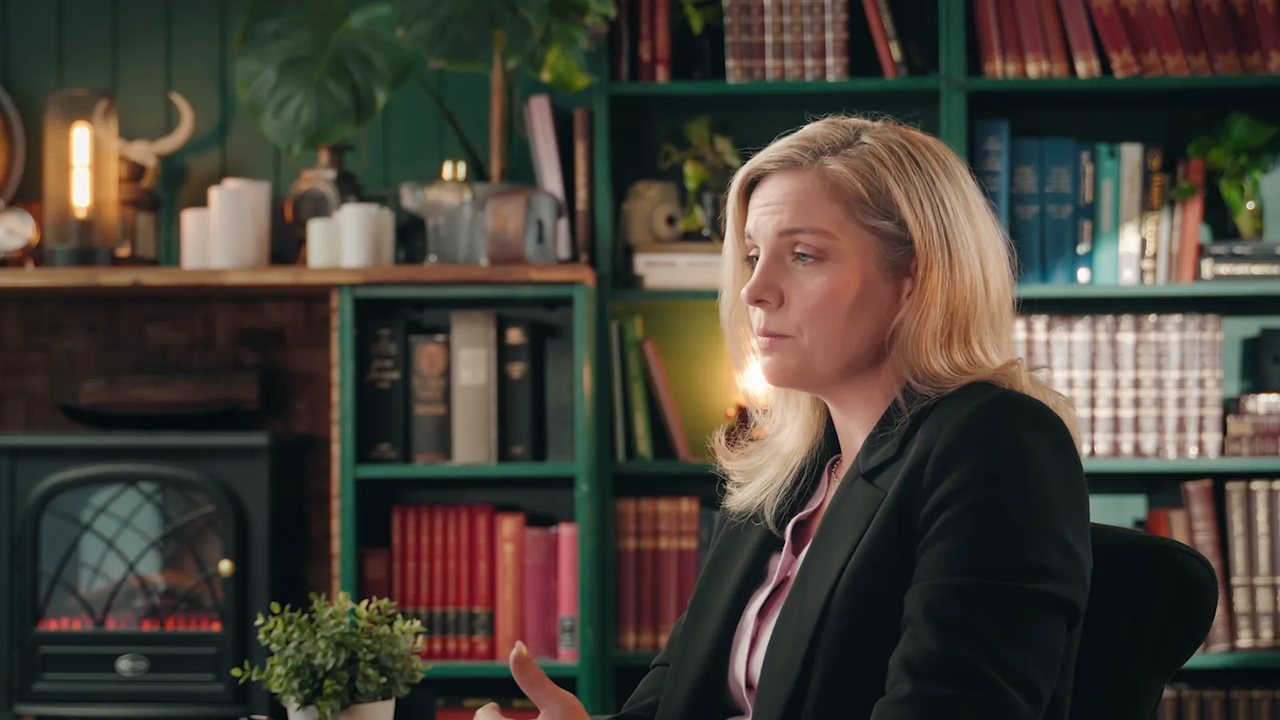
To get real people sounding like themselves on camera, stop them performing: don't hand them a script, ask questions they answer every week, keep the room calm and small, and give the conversation time to warm up. People deliver better when they're comfortable, and most of that comfort can be planned.
This guide covers why people freeze, how to prepare someone without scripting them, which questions get real answers and how the room shapes delivery. It also covers what the interviewer does during a take and what the edit can and can't rescue. The same craft works for founder stories, customer case studies and expert content.
Why do people freeze on camera?
Because a camera turns talking into performing. The moment someone who explains their work brilliantly across a coffee table sees a lens pointed at them, they switch into presentation mode: bigger words, stiffer posture, a voice they use nowhere else in their life. They stop telling you something and start trying to say it correctly.
Scripts make it worse for non-presenters. Now the person is performing and remembering at the same time, and remembering has a facial expression. Viewers can't name it, but they can see it. It reads as insincere even when the speaker is the most sincere person in the building.
So rather than coaching people to perform better, remove the performance. Build a session where the person does what they're already good at: answering questions about work they know deeply.
How do you prepare someone without scripting them?
Send topics, not lines. A one-page note saying 'we'll cover how you started, what clients get wrong, and the story about the first big job' gives someone the shape of the conversation without handing them anything to memorise. People who know the territory feel prepared. People who know the exact wording start rehearsing.
Do a 15-minute call before the shoot day, as a chat rather than a rehearsal. Listen for the topics that light them up and the ones that trigger corporate autopilot. The call also means they've met their interviewer before the shoot, so they aren't opening up to a stranger.
Then tell them explicitly that the edit protects them: nothing goes out that makes them look bad, and every stumble or lost thread gets cut. Most on-camera nerves come from the fear of being seen failing, and that fear shrinks fast once people understand the edit won't let a failure show.
Send the practical notes with the invite, so there are fewer decisions to make that morning: wear plain mid-tone clothing with no fine stripes or big logos, and arrive fifteen minutes early to settle in.
What questions get real answers?
Ask for stories. 'What's your philosophy on patient care?' produces a mission statement. 'Tell me about a patient who changed how you work' produces a human being. The reliable patterns: tell me about a time, walk me through, what surprised you, what do people get wrong.
A few mechanics separate a usable interview from a pleasant chat:
- Ask people to fold the question into their answer, because your voice won't be in the final cut. 'In 2015' becomes 'we opened the clinic in 2015'.
- Treat the question list as a map rather than a track. When an answer opens an interesting door, walk through it, because the list will still be there afterwards.
- Save one important question for near the end, then ask it again. Second answers are usually shorter and better, because the person has already found the words once.
- When an answer is good but long, say so and ask for it again in one sentence. People tend to take it as a compliment.
How do you set up the room so people relax?
Keep the crew footprint small. Every extra body behind the camera is one more audience member to perform for. Close the set to colleagues, too. Being watched by your own team is harder than being watched by strangers, and a manager in the room can change every answer.
Sit the interviewer directly beside the lens so the eyeline lands just off camera, and have the person talk to the interviewer rather than the glass. Direct-to-camera reads as an address. Off-camera reads as a conversation, and real people already know how to have one. If the piece genuinely needs direct address, treat it as a different craft and plan a separate session.
Get the microphone on early so they've forgotten it by the first question. Give them a decent chair that doesn't swivel and water within reach, and bring them in only after the room is built. Watching forty minutes of lighting setup drains anyone before the interview starts.
What does the interviewer actually do during a take?
Mostly, listen like it matters, and do it silently. Every audible 'mm-hm' lands on the recording and costs an edit point, so the interviewer's encouragement lives in the face and the nod, never the voice.
Hold the silence after an answer. Two or three seconds feels endless in the room and invisible on camera, and people often fill it with a more honest second thought. Some of the best material arrives after the person thinks they've finished.
Beyond that, the job is quality control in real time. Catch jargon and ask for the plain-English version. Notice when a key answer came out buried inside a tangent, and quietly log the strong takes so the editor knows where the best material is. The interviewer is the only person on set listening the way the audience will, while everyone else is listening as crew.
When can the edit save you, and when can't it?
The edit can hide a lot. Stumbles, false starts, tangents and the fourth attempt at the same idea can all disappear from the final cut, especially when b-roll covers the joins. That's why we can honestly tell nervous people their mistakes won't reach the screen.
On the day, audio comes first, energy second and coverage third, because those are what no edit can fix. A noisy room or a rustling lapel mic ruins takes that looked perfect. A tired, checked-out delivery can be shortened, but it won't get livelier. And if the key message never came out of their mouth in some form, no timeline can conjure it.
If someone is genuinely uncomfortable, change the format instead of pushing them through it. Use shorter cuts, or put their voice over b-roll of them working. The same session craft carries straight into podcasting for brands, where the conversation is the whole product. An interview shoot still needs real pre-production, including the call and the practical notes covered above.

Rather have this done for you?
Tell us what needs filming and when you need it. We'll plan the day around it and reply within one working day.
Questions we actually get
Should you send interview questions in advance?
Send topics rather than exact wording. People who know the areas feel prepared. People who know the precise questions write answers in their heads and recite them on the day. The exception is anything that needs legal or factual precision, where the wording should be agreed beforehand.
How long does an on-camera interview take?
Allow 45 minutes to an hour of recorded conversation to get a few strong usable minutes, plus setup time before it. The first stretch is usually warm-up, and the best material tends to arrive once the person forgets the room. A 20-minute booking often captures only the warm-up.
What should people wear on camera?
Wear plain mid-tone colours. Avoid fine stripes and tight patterns, which shimmer on camera. Pure white or black can fight the lighting, and large logos date the footage. Bring one spare option. Glasses are fine, because a good crew handles the reflections with lighting placement.
What if someone is genuinely bad on camera?
It's rarer than people fear, but it happens. Restructure rather than push: shorter cuts, their voice over b-roll of them working, or written answers delivered by someone else. Forcing a long talking head from someone who hates the camera hurts both the person and the brand.
Should the CEO be the one on camera?
Only if they're the right voice for the message. Audiences tend to respond to the person closest to the work: the practitioner, the product lead, the long-term customer. A reluctant CEO reading strategy points is weaker than an enthusiastic team member telling a true story.
Keep reading
Facts and pricing last verified July 2026. Written by the Visual Lab studio.