

What does professional video and content production actually cost?
Most agencies won't give you a number until you're on a call. This guide covers what drives the price, typical ranges for common jobs and how to budget so the quote doesn't surprise you.
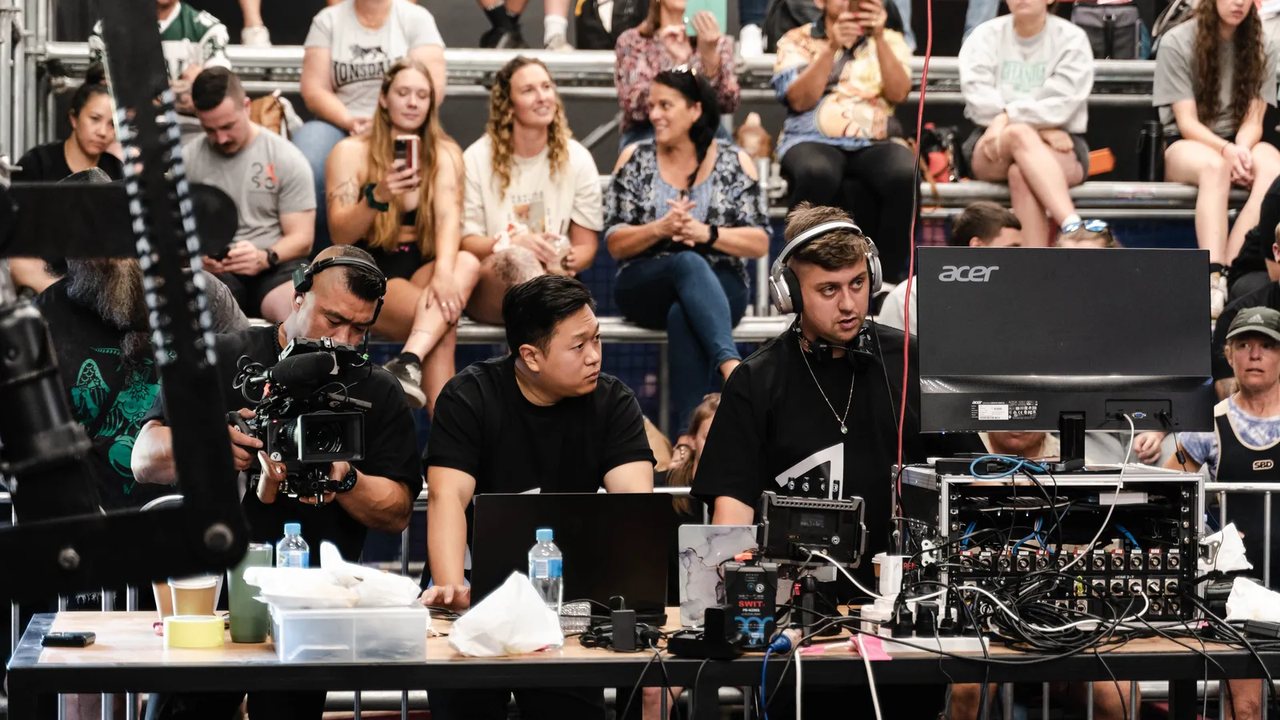
Professional video production in Australia typically starts at around $1,500 for a single operator with a simple edit. A multi-camera shoot day with a full edit package usually costs $5,000 to $15,000. The price comes down to people and hours: crew size, shoot days, edit complexity and how many finished assets you need.
That's the short answer. The rest of this guide covers why quotes vary so much, what the common jobs involve, where the money goes and the questions that keep a quote honest. If you're comparing quotes right now, read the next section first.
Why do production quotes vary so much?
Ask three suppliers to quote "a two-minute brand video" and the numbers can be miles apart. Usually nobody's ripping you off. The brief left gaps, and each supplier filled them differently.
The main variables:
- Crew size. Every camera adds an operator, and sound, lighting and a director each add a person. A one-person shoot and a five-person shoot are different products.
- Crews book by the day. Half days exist, but setup and pack-down take the same time, so a half day costs more than half the day rate.
- Edit scope. A clean cut with titles takes hours, while motion graphics, colour grading and several revision rounds take days.
- The number of deliverables. One hero film is one price, and the same footage cut into fifteen social assets in three aspect ratios is another.
- Talent, locations and gear. Actors, venue hire, drones and specialty lenses are legitimate line items.
When a quote looks much cheaper than the rest, check which of these has been cut. Crew is often the first to go, and that usually shows up in the audio.
What do the common jobs cost?
These are typical Australian ranges for jobs done properly, with a professional crew:
| Job | Typical range (ex GST) | What moves it |
|---|---|---|
| Single operator, half day + simple edit | $1,500–3,000 | Edit rounds, deliverable count |
| Multi-cam shoot day + edit package | $5,000–15,000 | Crew size, graphics, asset count |
| Single-camera live stream | $2,000–3,500 | Platform setup, audio complexity |
| Broadcast multi-cam live stream | $6,000–15,000 | Cameras, program hours, redundancy |
| Brand film / TVC-style production | Quoted per project | Concept, talent, locations, post |
Fixed scopes make entry-level costs easier to judge, so we publish ours. A Batch Day is from $6,500 and turns one planned shoot day into 20+ channel-ready assets over 14 days. A Stream Day is from $7,500 for a multi-camera broadcast with a highlights cut within 48 hours. The price holds unless the brief changes.
Where does the money actually go?
A professional production budget splits across four buckets: pre-production (planning, scripting, scheduling), the shoot itself (crew, gear, location), post-production (edit, sound, colour, graphics), and project management holding it all together.
Buyers tend to underestimate pre-production. It looks like paperwork, but it's the cheapest place to fix problems. A shot list written the week before takes an hour, while finding out on the day that you needed the CEO for two more scenes can mean a reshoot. When we plan a shoot properly, most problems are dealt with before the crew arrives.
Gear gets more attention than it deserves. The people operating the cameras matter more than the cameras. If the budget forces a choice, keep the crew and skip the camera upgrade.
How do you budget for content properly?
Budget by month or quarter rather than by video. The businesses that get content working commercially fund a cadence instead of buying one video and stretching it across a year. That means a planned shoot day each month or quarter, cut into everything the channels need until the next one.
Per-asset economics explain why. If a shoot day produces a single hero video, that video carries the whole day's cost. Plan the same day to produce twenty assets and the cost is shared twenty ways. The shoot is the expensive part, and capturing more while everyone is already there costs far less than booking another day. That's the logic behind our batch content day approach, and it's the biggest lever we know of on cost per asset.
For a business taking content seriously, a sensible starting point is one production day a month plus distribution. If that's beyond the budget, shoot quarterly rather than cutting crew quality.
What questions keep a quote honest?
Ask every supplier these six questions, including us:
- What's included in the day? Ask about hours, crew count and what happens if the shoot runs over.
- How many deliverables, in which formats? "The video" isn't an answer. You want the count, length and aspect ratio of each.
- How many revision rounds are included? Ask what each extra round costs.
- Who owns the footage? You want the finished assets and a clear answer on the raw material.
- What's the turnaround? Get dates for the first cut and final delivery in writing.
- What's not included? Talent, locations, music licensing, subtitles and paid-media versions are the usual gaps, and they're where budgets blow out.
A supplier who answers all six clearly is quoting in good faith, whatever the number is. If they get vague on two or more, expect the difference to turn up later as variations. We've written more on this in the questions to ask before you sign with any agency.
When is cheap actually expensive?
Cheap comes in three kinds, and only one of them is good value.
The good kind cuts scope: fewer deliverables, a tighter brief, one location and no talent. The work is still professional, there's just less of it. It's the right way to buy on a small budget.
The bad kind removes quality: one person doing three jobs, camera audio instead of a desk feed, no pre-production. The output looks fine on a phone screen until it sits next to a competitor's work.
The expensive kind is content you can't use, like the shoot that needed a reshoot, the video that doesn't match the brand or the footage nobody can find eight months later. None of it appears on an invoice, but you pay for it in assets that never get published.
If a quote is far lower than the others, check it against the six questions above. The missing piece usually shows up there.

Rather have this done for you?
Tell us what needs filming and when you need it. We'll plan the day around it and reply within one working day.
Questions we actually get
How much does a video cost in Sydney?
A single operator for a half day with a simple edit typically costs $1,500 to $3,000. A multi-camera shoot day with a proper edit package usually lands between $5,000 and $15,000. Brand films with concept, talent and heavy post cost more again, and are quoted per project.
Why is professional video so expensive?
Most of the cost is people and hours. A proper shoot needs planning and a skilled crew, then days of post-production. The camera is one of the cheaper parts. Cutting the price usually means cutting people, and that's the difference between professional work and a phone video.
Is it cheaper to hire a freelancer than an agency?
Per hour, usually. Per usable asset, not always.
A freelancer suits single bounded jobs. Once you need strategy and consistency across months, with several formats from each shoot, the coordination becomes your job, and that cost never shows on an invoice.
How many assets should one shoot day produce?
Planned for multiple formats before anyone presses record, one shoot day can produce 20 or more channel-ready assets, including hero cuts, stills, short clips and verticals for social.
Do you publish your prices?
Yes. Our fixed-scope entry products are public: Parallax Session from $4,000, Batch Day from $6,500, Stream Day from $7,500, all ex GST. Every paid product is credited in full against an engagement signed within 30 days. The full list, including the 13-week First Quarter, is on the pricing page.
Keep reading
Field note from the Log: what production costs in Sydney
Facts and pricing last verified July 2026. Written by Sam Kim, Founder · the Visual Lab studio.