

How do you build social proof that actually sells?
Buyers trust other buyers more than they trust you. Here's how to collect proof they'll believe and put it where they hesitate.
Social proof sells when it's specific, verifiable and placed next to the doubt it answers. A named customer describing a real problem you solved does more than a wall of anonymous five-star ratings, because buyers discount whatever they can't check. Collect it on a system and push for specifics. Then put each piece where buyers actually hesitate.
This guide covers the types of proof from strongest to weakest, a collection system that doesn't rely on remembering to ask, how to write a case study people finish and where each kind of proof belongs. It's written for businesses that do good work and undersell it.
Why does most social proof do nothing?
Walk through most business websites and the proof is technically there: a testimonials page nobody visits, a carousel of logos, quotes like 'great to work with, highly recommend' attributed to 'Sarah'.
It fails because it doesn't answer anything. A buyer arrives carrying specific doubts. Will these people understand my industry? Will it blow the budget? What happens if it doesn't work? Generic praise addresses none of that, so the reader files it under decoration and moves on.
Buyers are even quicker to dismiss proof they can't verify, like first names only, stock-photo headshots and results with no owner. Years of fake reviews have taught them to ignore anything they can't trace to a real person or business.
Which types of proof are strongest?
Proof doesn't all carry the same weight. From strongest to weakest:
- A result the buyer can check: a named client, a specific outcome and a way to verify it, such as a live website, a phone call or a public review. It's the hardest to earn and worth the most.
- A detailed review with the person's full name, business and something only a real customer would know. It's stronger on a platform you don't control, such as Google, because you couldn't have edited it.
- A video testimonial with a real customer speaking in their own words. It's harder to fake, and tone comes through in a way it can't in text.
- Volume ratings, meaning star averages and review counts. They're useful for a fast first impression and weak on their own.
- Logos and follower counts. They show that you exist and say little about whether you're any good, so use them as supporting detail and never as the main evidence.
At every level, a few specific pieces of proof do more than a lot of vague ones. Our own count is modest, 5.0 stars on Google from 26 reviews. A prospect can read every one of them and see who wrote it.
How do you collect proof systematically?
Clients are usually happy to help. Proof goes missing because nobody asks, or the request comes at the wrong moment with the wrong question. A simple system fixes that:
- Ask at the peak. The best moment is right after the win lands, whether that's the launch, the delivery or the first result. By contract renewal months later, the good feeling has faded into routine.
- Ask questions that produce specifics. 'Can you leave a review?' gets you 'great service'. Ask instead: what were you hesitant about before starting? What surprised you? What would you tell someone considering this? The answers tend to speak straight to the doubts your next buyer has.
- Make it a two-minute job. Send the direct review link, or offer to draft something from a phone call and let them edit it. Each step you remove makes a response more likely.
- Get written permission once to reuse their name, business and photo across web and social.
Build one ask into the delivery checklist for every project, so it happens whether or not anyone remembers.
If you serve consumers, Google reviews do two jobs. They persuade people and feed the local search results that bring people to you in the first place, so start there.
How do you write a case study people actually read?
Most case studies lose the reader in the first paragraph because they open with the vendor. Readers only care what you did once they recognise themselves in the problem, so structure it like a story:
- The situation: who the client is and what was at stake, in two sentences.
- The problem: what wasn't working and what it was costing. Buyers read this paragraph most closely, so make it recognisable.
- The work: what was done and why you chose that approach. Keep it shorter than you want to, because this part interests you far more than it interests the reader.
- The change: what's different now, in the client's own words wherever possible.
Publish only the numbers you can stand behind, with the client's sign-off. A case study with honest specifics and no revenue figure is stronger than one with an impressive number you can't defend.
When results can't be shared at all, show the work itself and let buyers judge the quality. That's the thinking behind our own work page.
Where should proof live?
Placement decides whether proof works. Put each piece next to the doubt it answers: proof about price near your pricing, proof about reliability near the enquiry form, and proof about quality on the service page it relates to.
Keep a testimonials page if you like, but treat it as an archive. A hesitant buyer rarely goes looking for it. These placements do more work:
- Google reviews, for local and near-me searches, where they're often read before your website is.
- Service pages, with proof matched to the specific service being considered.
- The enquiry page, where doubt peaks at the exact moment of commitment.
- Sales conversations, where one relevant case study sent after a call can do more than a general portfolio link.
Rotate what you use and retire anything stale. Leave dates off too, because a testimonial that announces it's from 2019 makes the reader wonder what's happened since.
The same logic applies beyond the website. Proposals, quote emails and pitch decks have their own moments of doubt, so put one relevant piece of proof at each point.
How do you get proof on video?
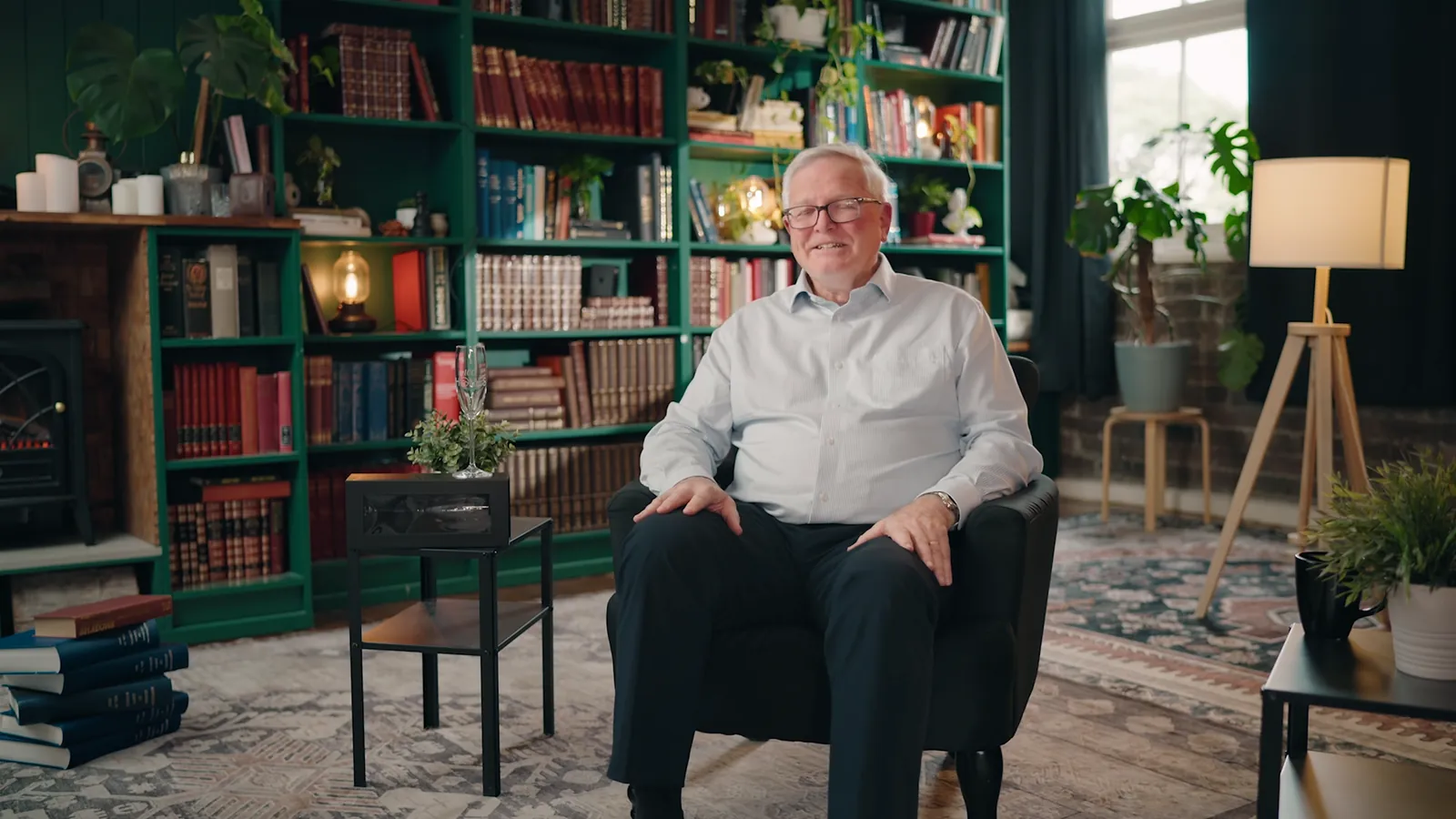
Video is the strongest testimonial format because it's hard to skim and hard to fake. You see a real customer on camera, in their own words. It's also the format businesses avoid, because the ask feels bigger and the production feels hard.
Both problems shrink once you treat it as an interview. Nobody presents to camera or memorises lines. They answer the same questions from the collection system above while a good interviewer keeps it conversational, and the edit shapes it from there. Ten usable minutes can become a ninety-second piece and a handful of short clips for social.
Getting non-presenters comfortable is its own topic, covered in interviews on camera. The practical point is to capture testimonials while a crew is already rolling for something else. Added to an existing shoot day, a testimonial takes minutes, whereas booking one on its own means paying for a separate shoot.

Rather have this done for you?
Tell us where the brand is now and where it needs to get to. We reply within one working day.
Questions we actually get
How do I ask a client for a testimonial without it being awkward?
Ask right after a win, and tell them why: their experience helps people in the same position decide. Keep it small, with three questions by email or a two-minute call you'll write up for their sign-off. Most clients are glad to help, and the awkwardness is usually all on the asking side.
Should I ever pay for reviews?
No. Fake or incentivised reviews risk breaching Australian consumer law, platforms remove them, and buyers are getting better at spotting them. Do work worth reviewing, then make the ask easy.
How many Google reviews do I need?
Fewer than you think, as long as they're detailed and recent. A steady trickle of named reviews beats a one-off blitz because it shows you're still doing good work. A burst followed by a long silence looks like a campaign that ended.
What if my clients can't go on record?
That's common in government and enterprise work. Use the details you're allowed to share: the sector, the problem, the process and the outcome. Buyers discount anonymous proof, so make up for it with detail and with the visible quality of the work itself, which counts for even more in these sectors.
Do follower counts work as social proof?
Barely. Buyers know audiences can be bought, and popularity rarely proves quality. A large following mostly shows you can hold attention, which matters if you sell content and much less if you don't. Specific reviews from verifiable customers do more work with a fraction of the numbers.
Keep reading
Facts and pricing last verified July 2026. Written by the Visual Lab studio.