

How do you start a podcast for your brand?
Brands that make podcasting work decide the format, host, cadence and distribution before anyone buys a microphone. Here's how to plan one, including when not to start.
Starting a brand podcast takes four decisions before any equipment: a format you can repeat, a host who'll stick with it, a cadence you can hold for at least a season, and a distribution plan that goes beyond the audio directories. The common failure is a show that goes quiet after a couple of months, so plan the first season before you record the first episode.
This guide covers whether a podcast suits your business, three setup tiers, the choice of format and host, cadence, and how one episode becomes a fortnight of content. It's written for marketing managers and owner-operators deciding whether the commitment is worth it.
Should your brand actually start a podcast?
A podcast suits businesses where trust and expertise drive the sale: professional services, B2B, considered purchases, founder-led brands with a real point of view. A listener can give you twenty minutes of close attention, which is hard to get any other way. Guest episodes can open business conversations too, because a prospect or partner who'd ignore a cold email may well accept an invitation onto your show.
It doesn't suit every business. A show will struggle if the sale is impulse-driven, nobody will commit to hosting, or every episode is a repackaged sales pitch. The usual failure is a strong launch and an episode a week for two months, then nothing. A feed that stops mid-season stays visible to everyone who finds it later.
Before spending anything, name the host, list twenty episode topics and confirm the host can protect the time for a full season. If any of those stalls, sort it out before you price a microphone.
What setup do you actually need?
There are three realistic tiers.
- At the remote tier, each person uses a decent USB or XLR microphone in a quiet room, and a recording platform captures local audio at each end. It's the minimum setup, and done carefully it sounds professional.
- In-person audio means two or three microphones into a small interface or recorder, in a treated or soft-furnished room. The conversation and the sound both improve, though setup takes longer.
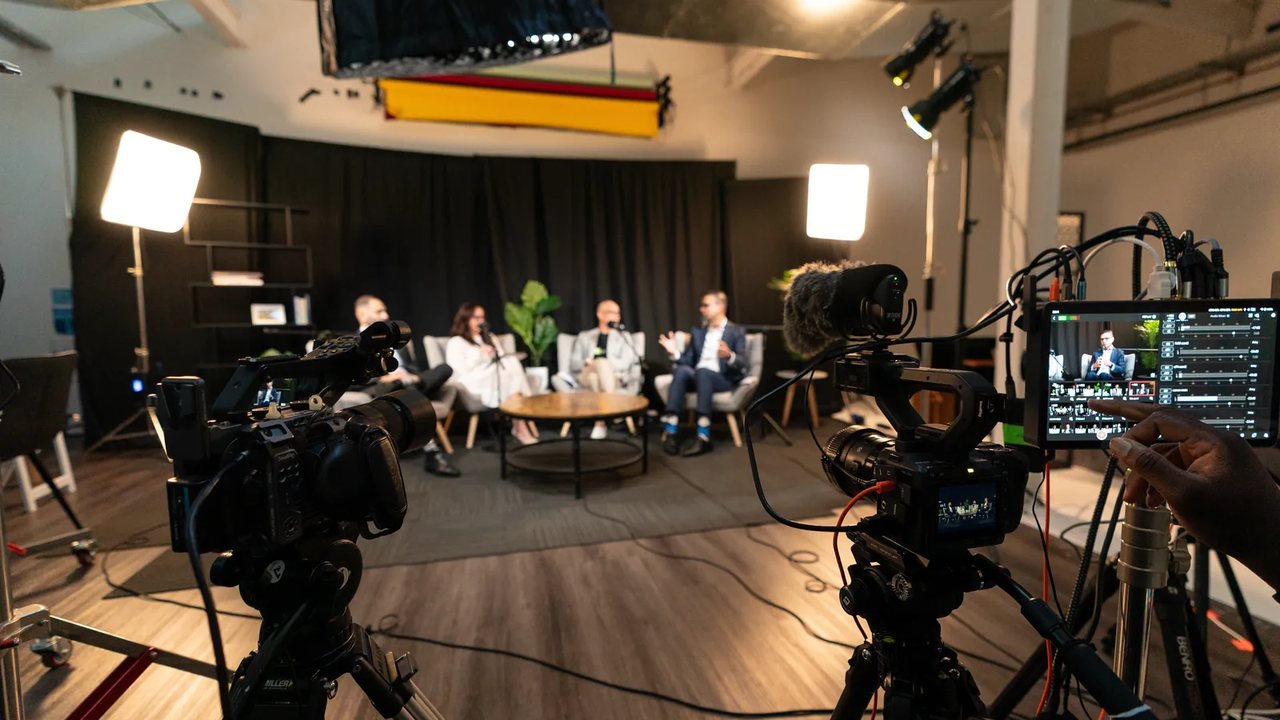
- A video podcast adds multiple cameras, lighting, proper audio and someone to operate it all. Video gives each episode far more places to go, and the recording becomes a shoot that needs planning like any other.
At every tier, a modest microphone close to the mouth beats an expensive one across the desk. The room matters more than the gear: soft surfaces, no echo, no air-conditioning hum. We record in our own studio for that reason, though a quiet boardroom with blankets over the table can produce a perfectly good episode.
What format should it take, and who hosts?
Pick from three formats. Interview shows are the workhorse. A rotating guest brings fresh material every episode and builds relationships along the way. Co-hosted conversations suit two people with real chemistry and complementary knowledge. Solo shows are the hardest to sustain, because everything depends on the host's depth.
Choose the host for willingness over title. The right host will still show up in month eight, ask short questions and let guests finish their sentences. That's often not the CEO. Someone stiff on mic usually improves within a handful of episodes, and the skills overlap heavily with getting real people to sound like themselves on camera.
Length should follow the content. Interview shows commonly land between 30 and 45 minutes, and a tight 20 minutes is better than a padded 50. Give every episode a repeatable shape so it feels like a show: a cold open with the strongest moment, then the conversation, then one closing question you ask every guest.
Name the show for the listener's problem. 'The [Brand] Podcast' tells a stranger nothing. A show named for the question it answers is easier for the right people to find, and your brand still gets the credit as the host.
What cadence can you actually sustain?
Weekly is the default, but plenty of teams can't keep it up. Fortnightly is manageable for most small teams and still frequent enough to hold an audience, while monthly struggles to build momentum.
Seasons work better than an open-ended schedule. Commit to eight to twelve episodes and publish them on schedule, then take a planned break. Decide on the next season once you have a finished body of work to judge.
Batch recording makes any cadence easier to hold. Record three or four episodes in one session and you've banked six to eight weeks of fortnightly releases from one setup and one block of the host's time. The setup is the expensive part of any production, so get more out of each one. That's the premise of the batch content day, and it applies to podcasts as directly as it does to video.
How do you distribute and repurpose each episode?
Publishing the audio to Spotify and Apple through your hosting platform is the minimum. Each episode should become a set of assets:
- The full episode on the audio directories, plus YouTube if you recorded video.
- Two or three vertical clips of the strongest moments for social feeds. Clips are usually how people discover a brand show, because few browse podcast directories looking for one.
- A transcript and written show notes on your own website, which give search engines and AI assistants something to find and cite long after the episode airs.
- A newsletter item built around the episode's best insight, with a link for readers who want the whole conversation.
Cut the clips while the episode is fresh, ideally during the edit rather than as a separate job someone gets to later. Done that way, one episode can feed every channel you run for a fortnight.
How do you know if it's working?
Download numbers get checked first, and at brand scale they're the least useful measure. Early numbers are modest for every show, and they say nothing about who's listening.
The returns that matter don't show up in a downloads chart. Look for guests who become clients, partners or referrers, and for prospects who mention an episode in a sales conversation. Buyers can also arrive warmer, because they've heard hours of your thinking before the first call, and the clip library keeps feeding your social channels between episodes.
Judge it over a full season. Ten episodes in, ask whether the host is still willing, whether the conversations are getting better, and whether a single commercial door has opened that wouldn't have otherwise. Two yeses means the show is worth continuing. If it isn't working, a completed season is a clean place to stop.

Rather have this done for you?
Tell us what needs filming and when you need it. We'll plan the day around it and reply within one working day.
Questions we actually get
What equipment do you need to start a brand podcast?
At minimum, each person needs a decent microphone and headphones, plus a quiet, soft-furnished room and either a remote recording platform or a small recorder. That setup can sound professional. Video adds cameras and lighting, plus someone to run them, which makes it a production. Start at the tier you can keep up.
Do you need video for a podcast?
Not to start, but it changes distribution. Video gives you YouTube and much stronger social clips, which are usually how new listeners find a brand show. The trade-off is that every recording becomes a shoot with cameras and crew. Plenty of brands start audio-only and add video once the cadence has held for a season.
How long should a podcast episode be?
As long as the conversation stays good. Interview shows commonly land between 30 and 45 minutes, and a tight 20-minute episode is better than a padded 50. For reaching new listeners, the clips you cut for social usually matter more than the length of the full episode.
How often should a brand podcast publish?
Fortnightly suits most small teams. It's frequent enough to hold an audience and manageable through busy months. Weekly can work if you batch-record. Either way, plan in seasons: commit to eight to twelve episodes, publish on schedule, take a break, then decide whether to run another.
How many episodes before you judge whether it's working?
A full season, meaning eight to twelve episodes. Early download numbers are modest for every show and tell you very little. Look for guest relationships that became commercial, prospects who mention an episode and a host who still wants to record.
Keep reading
Facts and pricing last verified July 2026. Written by the Visual Lab studio.